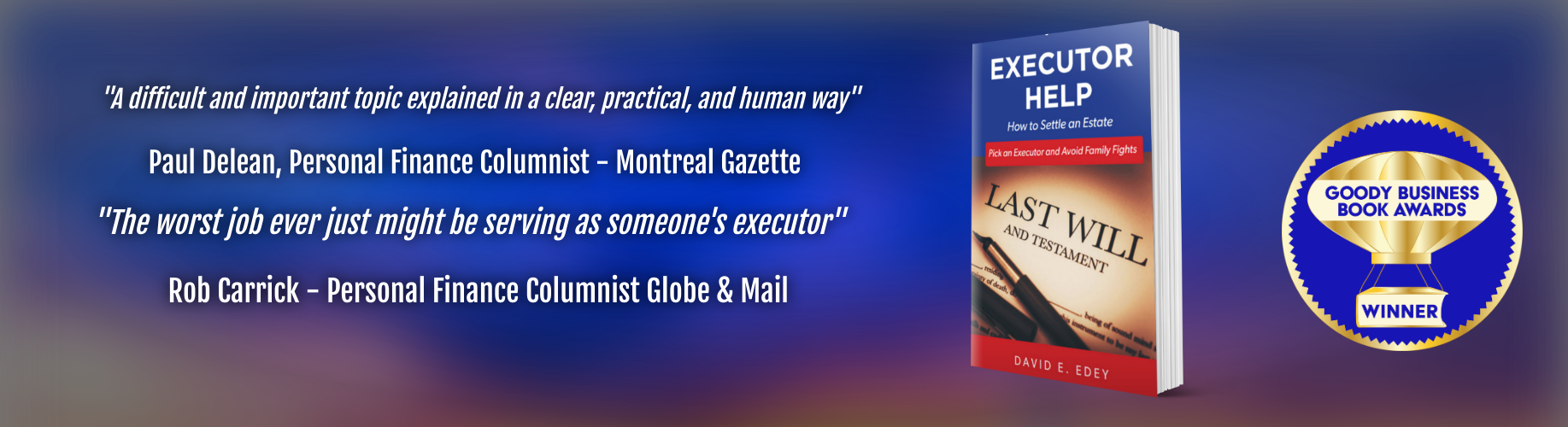
Executor Help — How to Choose an Executor and Avoid Family Fights
Being an executor — or choosing one — is one of the most important decisions in estate planning, yet many families don’t fully understand what the role involves.
Executor Help is here to explain what an executor actually does, how to choose the right person, and how clear planning can prevent confusion, stress, and family fights later on.
Here's why this matters
Most problems with estates don’t start with bad intentions.
They start when people don’t know:
- what they’re responsible for
- what decisions they’re allowed to make
- or what the person who died actually wanted
When this isn’t clear, families are forced to make choices during a stressful and emotional time.
That’s when confusion grows, delays happen, and relationships can be damaged.
Executor Help exists to prevent that.
Meet David

I’m David Edey, a Certified Executor Advisor and financial planner.
For more than 40 years, I’ve helped families plan ahead and deal with the responsibilities that come after someone dies.
I’ve worked with hundreds of families, written extensively on executorship, and spoken publicly about estate planning and legacy issues.
But this work became personal for me.
Even with a written will, my own family spent seven years and more than $50,000 dealing with conflict after my parents’ estate. That experience taught me something important: documents alone are not enough.
Families need clarity, communication, and preparation — not just paperwork.
What Executor Help provides
Executor Help is for families who want to make things easier, not harder, for the people they leave behind.
It helps you:
- Understand what an executor is really responsible for
- Choose the right person before decisions are rushed
- Talk things through while everyone is still calm
- Reduce stress, delays, and family tension later
This isn’t about legal words or complicated rules.
It’s about giving your family clear direction and fewer burdens at a difficult time.
A calm next step
If learning about executorship has made you think about your own family — and how responsibility might one day shift — there is a simple, structured way to work through this without pressure or overwhelm.
The Family Legacy Blueprint is a practical framework designed to help families organize important information, have clear conversations, and reduce stress long before decisions are forced by time or circumstance.